Fill in every knowledge gap with assessments
Brilliant’s assessments identify what you understand, where your foundations are shaky, and what to practice next – then use that to design structured, effective tutoring.

Continuous, low-stakes micro-assessments

Skill checks
Skill checks at the end of every lesson give you a chance to solve problems on your own after learning a concept. They assess whether the idea has clicked, and whether you can recognize when and how to use what you learned.

Personalized practice
Personalized practice uses your learning history to generate problems focused on areas that need more attention. Instead of repeating everything, you spend more time where practice can make the biggest difference.
Summative, long-range assessments

Unit checks
Topics on Brilliant are divided into units, which are groups of lessons that focus on specific skills. Unit checks test everything in a unit, plus the earlier material it builds on. They use interleaving, mixing in problems from prerequisite topics alongside problems from the current unit. Missing a problem might mean you need more practice on that type of problem. Or the true obstacle might be an earlier idea that never fully clicked. If so, lessons that let you review that idea would get added to your learning plan.
Unit checks gauge what you’ve mastered and what’s missing across dozens of concepts, both in your current unit and the ones around it.

Mock tests
Coming Nov 2026Mock tests evaluate learning retention and retrieval across a much longer time horizon, like a midterm, final exam, or standardized test. They cover the widest range of skills and problem difficulties. As a result, you can’t simply guess the approach to solving a problem based on the units you’ve recently completed.
Mock tests will start rolling out in November 2026.

Tutoring session to review your assessment

Reviews
One of the best moments to learn is when you make a mistake. Reviews focus on the assessment problems you missed, and can also ask you to explain problems you answered correctly to check for true understanding. With Koji, you can revisit your reasoning, find the source of the mistake, and work toward the correct answer together.
Reviews are available for every type of assessment. If the review reveals a prerequisite gap, Koji may recommend revisiting an earlier skill, or add a relevant set of prerequisite skills to your plan. This recommendation is based on the pattern of your answers across current and prerequisite skills – not on individual questions you missed.
How Brilliant assessments map your knowledge
The skill graph
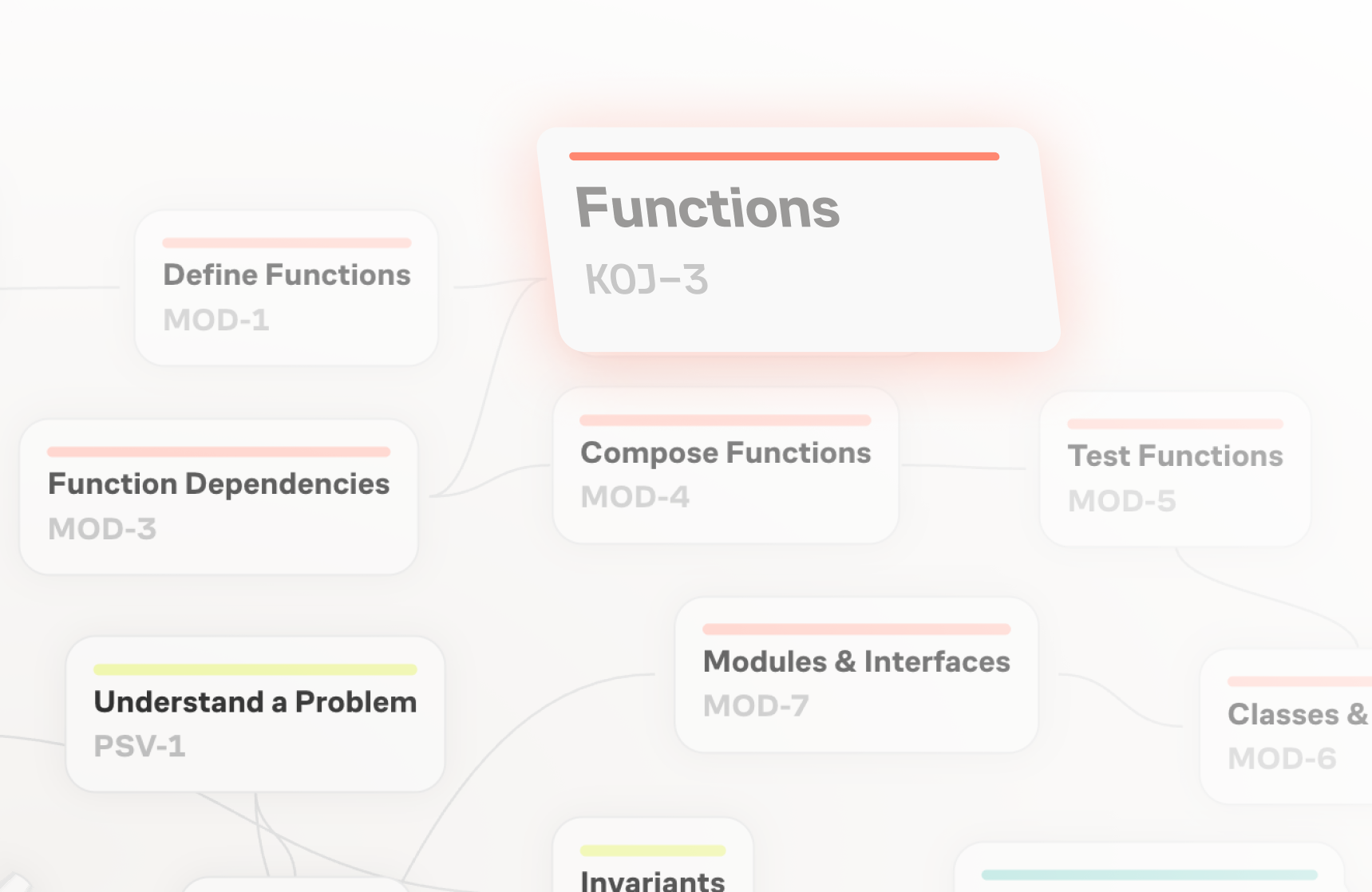
Every skill on Brilliant is connected to the ideas it depends on. Those relationships form a map of how understanding builds from foundational concepts to more advanced ones.
Brilliant looks at the prerequisite map beneath the skills being assessed. For example, in unit checks, the first diagnostic skill is chosen near the midpoint of that graph. In effect, it divides the possible gap in half.
Adaptive questions
Each assessment works a little differently, but in general assessments are designed to ask questions that:
- Test skills in the current unit.
- Test those skills again in different problems, which helps distinguish consistent understanding from a lucky guess or a one-off mistake.
- Test an earlier prerequisite skill, which reveals whether an older gap may be getting in the way of the current material.
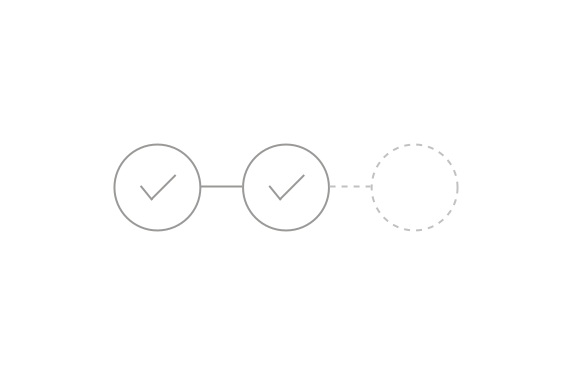
If you’re still struggling, Brilliant may add more questions to the assessment. Those questions aren’t simply “harder.” They’re selected to narrow down where the missing foundation sits.
Going deeper
If more info is needed to pinpoint a gap, Brilliant checks skills from earlier and later regions of the skill graph until it identifies the underlying issue. Skills are prioritized based on:
- Diagnostic reach: how many of the unit’s assessed skills depend on that prerequisite
- Balance: how effectively the skill divides the remaining search area
- Importance: preference for high-leverage skills that support many later ideas
- Breadth: when useful, preference for prerequisites that appear across courses

How the pieces work together
TLDRAssessments should move learning forward. The point isn’t to label you as “good” or “bad” at a subject. It’s to make the next step clearer. Brilliant’s assessments help you see what you know, find what’s getting in the way, and use every mistake as material for progress.
| Experience | What it helps answer | What happens next |
|---|---|---|
| Skill check | Did this lesson click? | Confirm understanding or revisit the concept |
| Personalized practice | What should I strengthen now? | Practice the skills that need more attention |
| Unit check | Am I ready to move ahead? | Continue, or reinforce a foundation first |
| Mock test | Am I ready for this test? | Continue, or reinforce a foundation first |
| Koji review | Why did I miss that? | Diagnose the mistake and learn from it |