Brilliant is a math and coding learning platform that can be used flexibly — as a core curriculum, as a supplemental resource, or for interventions, remediation, or enrichment. Teachers typically use Brilliant in one of these ways:
- Core curriculum (i.e., lessons plus homework)
- Supplemental resource (i.e., class warmups, practice, review)
- Intervention or remediation (i.e., assigning to students who need to strengthen foundations)
- Enrichment (i.e., assigning to students who are ready to move ahead of the class)
Core, supplement, intervention, and enrichment
Schools and districts often sort math resources into these four categories, though the same resource can play different roles in different classrooms.
| Model | What it means | Where Brilliant fits |
|---|---|---|
| Core curriculum | The main program a school uses to teach a full subject or grade level | Near core-level coverage in some pathways, such as Algebra, but not yet a stand-alone replacement across all grades and subjects |
| Supplemental resource | Flexible material that supports the curriculum a school already uses | Strongest fit: warmups, practice, review, and interactive concept work |
| Intervention | Targeted support for students who need help with specific skills | Can be useful as one teacher-guided resource, not as a full intervention program |
| Enrichment | Additional challenge or exploration beyond required classwork | Strong fit for early finishers, advanced students, math clubs, contest math, and independent exploration |
How Brilliant supports core math instruction
Brilliant is part of core math instruction, and it works alongside a school's curriculum (though it can also be used as a standalone curriculum). Teachers incorporate Brilliant into lessons to introduce a concept visually and interactively, give students hands-on practice after direct instruction, or revisit a skill from a different angle.
Brilliant is organized around concepts and skills rather than a district's fixed course sequence. A teacher can start with their lesson objective, easily find a Brilliant lesson that supports it, and use that lesson to help students reason through the idea instead of only applying a procedure.
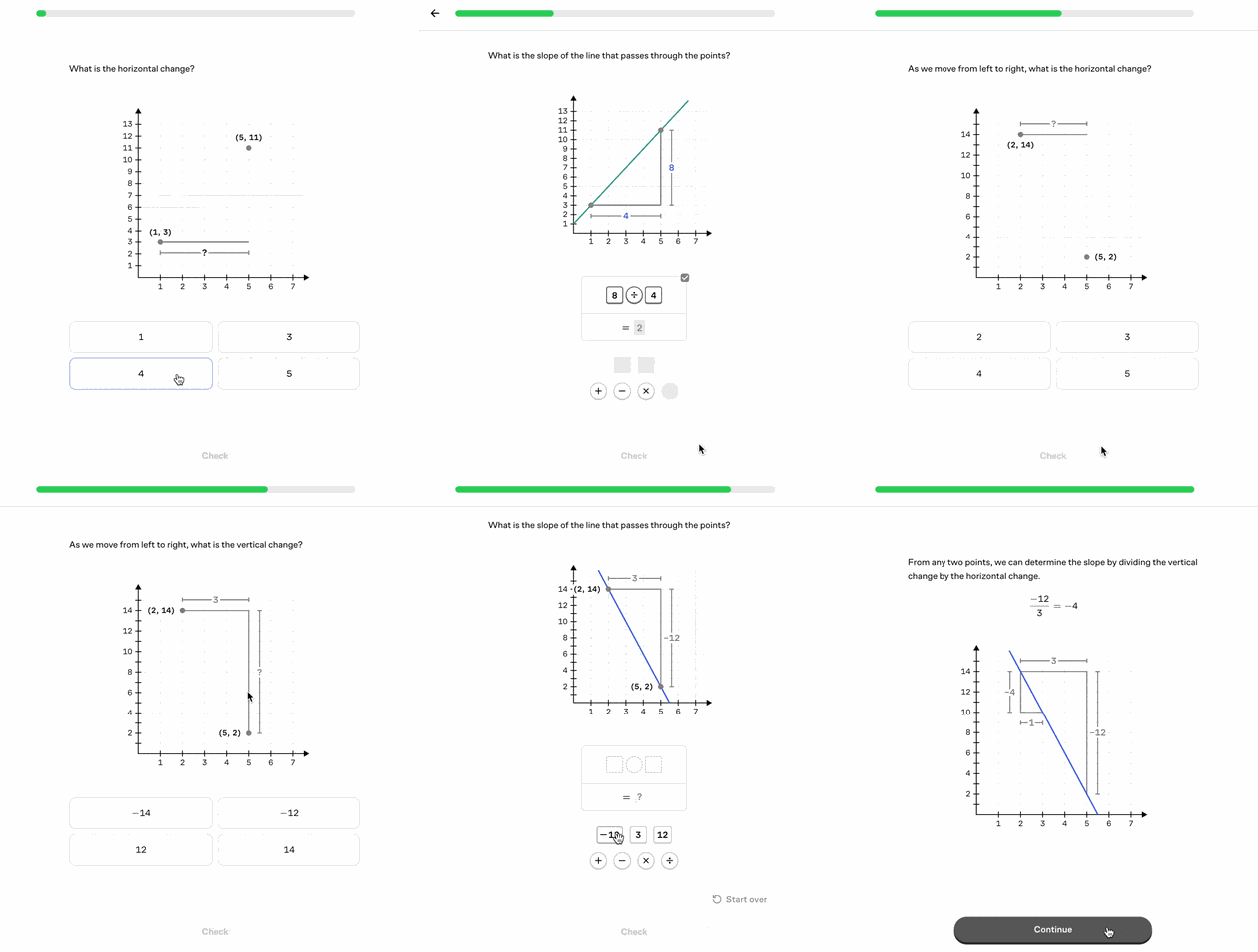
Brilliant has broad Common Core coverage, especially in middle and high school:
- Grades 4–5: 73–79% of mapped standards
- Grades 6–8: 91–100% of mapped standards
- High school: 89–100% of mapped domains, including Algebra, Functions, Geometry, Statistics and Probability, and Number and Quantity
That makes Brilliant a strong support for many core math units, especially Algebra and other pathways in grades 6–12. For standard-by-standard detail, see Common Core math coverage: grade-by-grade Brilliant lesson mapping.
Why Brilliant works well as a supplemental math resource
Teachers use Brilliant alongside their existing curriculum to make math more interactive and easier to reason through. Our lessons can support the day's objective without requiring the teacher to build new slides, worksheets, or activities from scratch.
Common supplemental uses include:
- Warmups connected to the day's topic
- A visual model before a formal method
- Practice after a teacher explanation
- A second approach when students need another way in
- Review before an assessment
- Independent work during rotations
In a 2024 survey of Brilliant for Educators program participants, over 50% of active teachers reported using Brilliant regularly as a "Do Now" or class warm-up.
How Brilliant supports enrichment
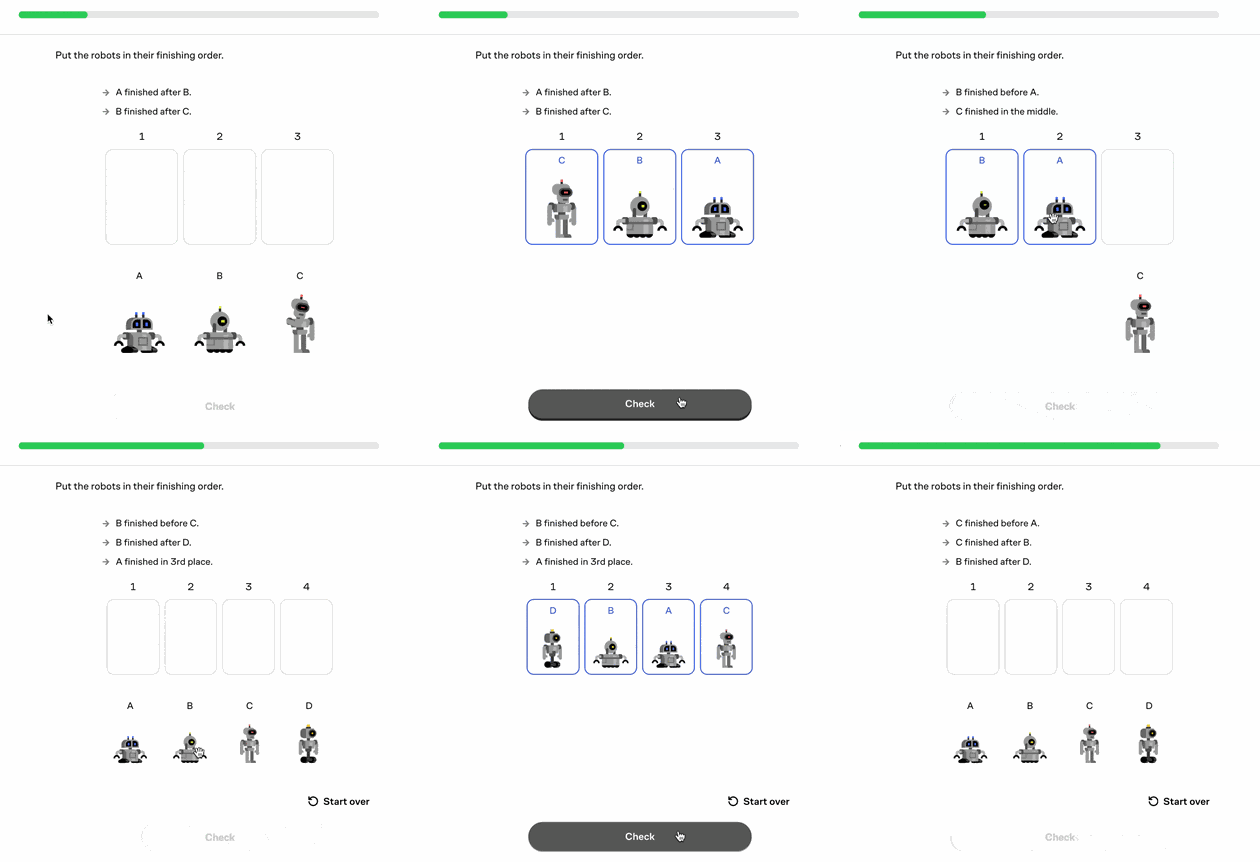
Brilliant gives students who are ready for more a path into deeper learning beyond required classwork. A student who finishes core work can move into one of these paths on their own, without you needing to build a separate extension activity.
Examples of enrichment paths include:
- Advanced math: logic, number theory, calculus, infinity, and other topics that often sit outside a standard grade-level sequence
- Contest and puzzle math: problem-solving courses that build flexible reasoning for math clubs, competitions, and independent exploration
- Data and statistics: visual data exploration, probability, statistics, and applied quantitative reasoning
- Computer science: coding, algorithms, and data science courses for students ready to branch into computational thinking
Brilliant also partners with math enrichment organizations like MATHCOUNTS, the national middle school math competition, and National Math Stars, a nonprofit supporting mathematically gifted young students. These partnerships reflect the strength of Brilliant's content for enrichment and extension, especially for students ready to explore beyond grade-level curriculum. Their students often gravitate toward our Contest Math course, along with advanced courses like Number Theory and Infinity.
How Brilliant supports intervention
We can give students another route into a concept they need more time with because lessons are visual, interactive, and low-pressure. When students get a problem wrong, they are prompted to try again, rather than getting docked points or other visual reprimands.
This means students can test a strategy, get feedback, use hints, and eventually get the problem right without waiting for a teacher on every step.
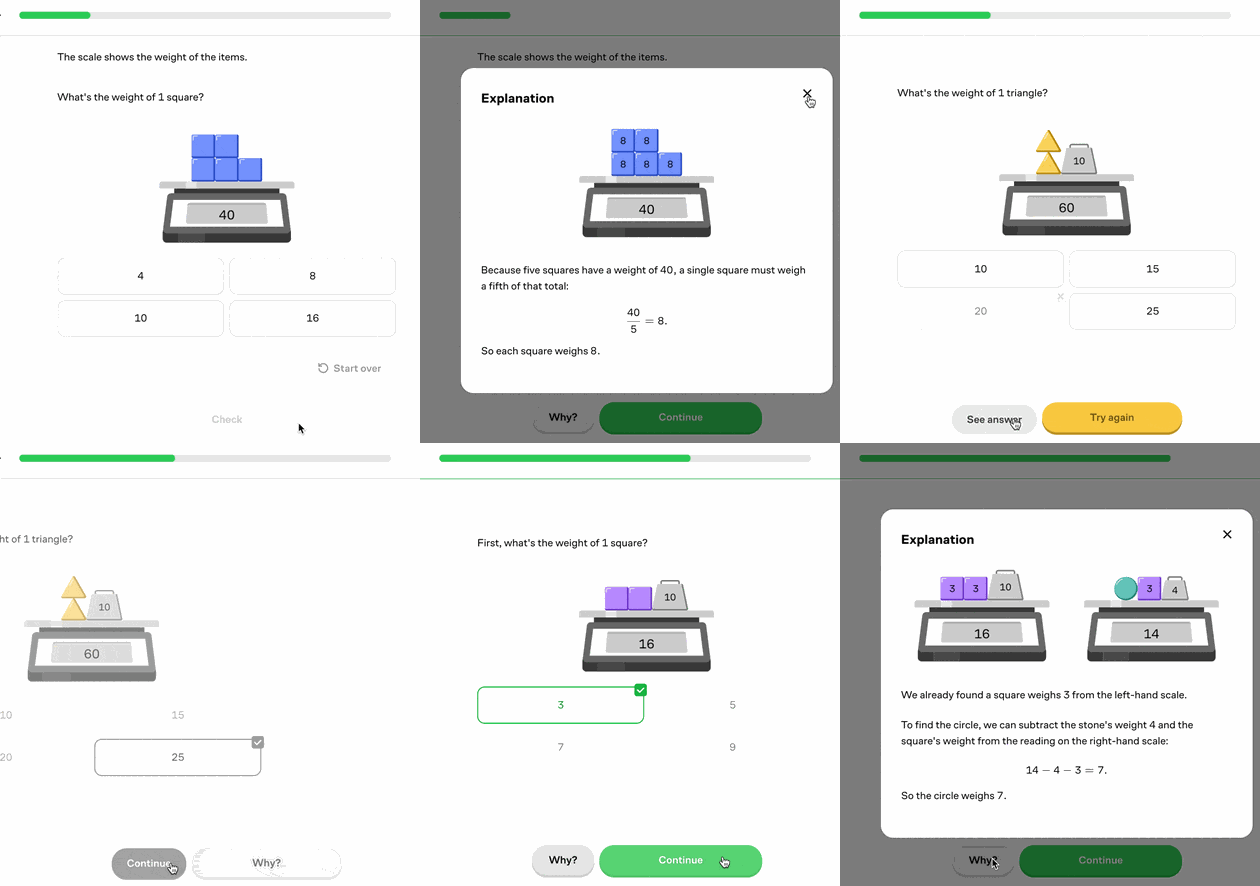
Today, Brilliant is not a full intervention program on its own, though level reviews (10–15 problems, no hints) can give a signal on whether a student is ready to move or identify a learning gap they may need to revisit. That signal does not replace formal diagnosis or individualized planning but can be used as one piece of a broader support plan.
How schools use Brilliant across implementation models
| Classroom goal | How teachers use Brilliant | Model |
|---|---|---|
| Start class with the day's concept | Use a 5–10 minute Brilliant lesson as a warmup or hook | Supplemental |
| Introduce or review a core concept | Use a related lesson during daily instruction | Core resource |
| Practice after instruction | Assign a lesson tied to today's objective for independent work or rotations | Supplemental |
| Stretch early finishers | Point students to the next lesson, next level, or an enrichment course | Enrichment |
| Support a small group | Assign a lesson on a specific skill gap, then discuss mistakes or misconceptions | Intervention support |
The examples above show the implementation models at a glance. For a more detailed classroom routine guide, see How Brilliant fits into a math lesson.
What Brilliant should not replace
Brilliant is not a complete school-adopted math program by itself; schools should still use additional resources for:
- The district's required scope and sequence
- Formal pacing decisions across the entire school year
- Required assessments and grading policies
- State, district, or school-specific standards documentation
- Teacher-led intervention plans for students with significant gaps
School-evaluator checklist
Use this checklist to decide whether Brilliant fits the job your school needs this resource to do. If you are ready to set up access, rostering, privacy approval, or district rollout, see How to roll out Brilliant at a school or district.
| If your school needs… | Brilliant is a good fit when… | Best paired with… |
|---|---|---|
| Core curriculum support | Teachers want interactive lessons that complement the curriculum they already use | A district-approved scope, sequence, assessments, and grading plan |
| Supplemental practice | Teachers need ready-to-use visual practice tied to current topics | A lesson-selection routine tied to the day's objective |
| Enrichment | Early finishers, advanced students, or math-club students need deeper challenge | A plan for whether students extend current work or branch into advanced topics |
| Formal intervention | Brilliant is one resource inside a broader support plan | Diagnostic assessment, progress monitoring, individualized goals, and teacher- or specialist-led support |
Frequently asked questions
Can Brilliant replace my school's math curriculum?
Brilliant works great alongside the curriculum your school already uses, and has strong coverage across the topics in common standards. Teachers use us to make core instruction more visual, interactive, and practice-rich. It is also possible to use Brilliant as a wholesale replacement for math curriculum, especially in schools that are not tied to specific or rigid existing standards.
Is Brilliant only for enrichment?
No. Enrichment is one strong use case, but teachers also use Brilliant for warmups, core instruction, practice, review, and small-group support.
Can Brilliant support intervention, including Tier 2 or Tier 3?
It can support targeted practice inside a broader intervention plan when a teacher picks the lesson and follows up with instruction. It is not a complete Tier 2 or Tier 3 program on its own; schools still need their own diagnostics, progress monitoring, and individualized goals.
Is Brilliant aligned to standards?
Brilliant has standards-mapped math coverage, with strongest coverage in several middle- and high-school topics. You can use the Common Core math coverage guide for the detailed standard-by-standard answer.